Author: Martin

IV. 12/02-17/02/17; s’ingénier

Work is what you do for others, art is what you do for yourself. Sondheim finds a way of connecting Seurat’s approach to painting with the experience of a modern artist: Seurat paints point by point and the picture only comes together in the visual cortex (?) of the viewer, where the points merge into a greater whole. Similarly, the modern artist must pool followers and financial support drop by drop, but how does it come together in the end? Who has the patience to keep looking? Sunday in the Park with George, Stanwix Theatre Full moon, drifting dark clouds like ink in water. A perfect orb, itself flecked with dark marks, like smaller versions of the clouds that mask it from the viewer on earth. Lantern festival, 15 days into the new lunar month. Traditionally this was the one day in the year when young women could go out on a date without fear for their reputation. You can imagine the scenes: lanterns of all shapes and sizes, mechanical contraptions, the bustling street, throbbing …
III. 6/02-10/02/17; hypnotic

Henry James on M. Sarcey: a theater critic but the text could be modified to describe a wine-critic.  Robert Parker comes to mind. When you make and unmake fortunes at this rate, what matters it whether you have a little elegance the more or the less? What principles does the theatre rest on? Vaguely and inconveniently registered mass of regulations which time and occasion have welded together and from which the recurring occasion can usually manage to extract the right precedent. Even the smallest thing can be perfected, become part of the polish. There’s a mystic salubrity in the bad ventilation of the theatre, he writes. The theatre-night starts with the performance of plays by less established performers. You can stay all night; “Stageflix.” He samples other theatres, but soon gives them up. They do not pay-off in the same way: less depth. It would be much better if everyone wore a suit. Cleaner, uplifting, you’d feel motivated for the day. Instead: cargo pants, t-shirts, Lycra, cord, woolly hats, synthetic jackets. Not a single tie in …

II. 30/01-03/02/17; Waiting on the Barbarians

Luberon is still in the Rhone, though it could be Provence. A border town. All the reds contain Syrah and some Grenache and perhaps Mourvèdre and Cinsaut. “If you attack Persia, you will destroy a great empire.” The art of giving predictions that will hold true: Croesus attacked, believing this prediction to be in his favour and lost the empire he had built. It’s the 365522 today. The puddles had already formed on the platform, puddles of people accumulated where the doors are known to open. A group of regulars form a private puddle. Sure you can join it, but you’ll never be first on. One of them will have a better spot and they work together, letting each other in. It’s crowded today, no seats except on one of the 4 seat islands with 2 facing 2. None of the other three are wearing suits. Diagonally opposite: a woolly hat drawn down to the tip of his nose, all dressed in black, his head against a cushion propped against the window. His beard is …

I. 23-29/01/17; Muddled Energy

Thoughts from the train (Class 365, mostly). Genetics; variations on a theme; phenotype and genotype; the collective and the individual unconscious. We moderns want definiteness, clarity, precision from the world around us, but our lives are all muddled. More and more technology is available to provide clarity, but the human operator is overwhelmed. The technical capability is much more than we need to solve our simple problems. The more technology becomes available, the more focused we must be. Analogue technologies require an investment in time. They settle into your life as you adapt. It’s an organic growth. Paul Auster writes his novels by hand, types them out on a typewriter and then hands the copy on for digitization. Life does not open up with a swipe of the finger. Analogize you digital tools. You must not digitize your life. When something is easy, it’s a potential distraction. Nothing is valuable without engagement, agency, intention. A good watercolourist has faith: the mess of colour and water over penciled lines will develop and become whole. He sees …

Work or play?

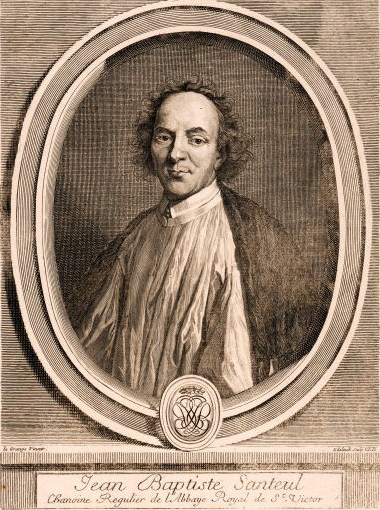
Edited excerpt from Drinking with Proust (Leanpub) Image: Portrait of Jean-Baptiste Santeul by Gerard Edelinck, ca 1700. How should we balance work with play? Proust’s first novel Jean Santeuil is a young man’s exploration of life’s trade-offs. Proust’s character is buffeted by contradictory desires: should he get ahead in society or nurture his “little gift of poetry”? William Hogarth – Industry and Idleness, Plate 1; The Fellow ‘Prentices at their Looms. Quote from Proverbs 23:21, “For the drunkard and the glutton shall come to poverty: and drowsiness shall clothe a man with rags.” Proust borrowed the name of his novel’s main character from history. Jean-Baptiste Santeuil (1630-1697) grew up in a well-off merchant family and joined a community of lay canons at St. Victor in Paris. His career was promising. He rose to the rank of subdeacon, which was a stepping stone towards a valuable priesthood. But Santeuil was not inclined to take the straight and narrow path. He discarded his robes and made a name for himself as an eccentric poet. People called him a “devil whom God …

Boni goes bust

Edited excerpt from Drinking with Proust Image: La Vie Parisienne, de Castellane Advert In the winter of 1867, Anne-Marie Le Clerc de Juigné, wife of Marquis Boniface Antoine de Castellane, gave birth to her first son. He was named Boniface, but became known as Boni. He was brought up at his parent’s residence in Paris and at his grandmother’s Château de Rochecotte, a grand villa in the heart of Bourgeuil surrounded by vineyards.52 Boni and Marcel Proust crossed paths in around 1893 when Marcel joined Madeleine Lemaire’s Salon, “one of the most stimulating and amusing in Paris,”53 which was also attended by Boni. In 1894 Boni travelled to America in search of a rich heiress. He needed money. While I had ancestry, title and the very highest social prestige, my income was quite inad-equate. The family estates were important but expensive to maintain; and the Castellane income was not equal to maintain myself and my estates suitably. It was, therefore, not a bad bargain on my part to insure a sufficient income to support my rank in …

Forever Young, Osteria Veneta. Part III/III

Osteria Veneta’s wine menu is heavy. The cursive script has to be deciphered line by line. The only white available by the glass is a Bianco di Custoze. The menu lists the varieties it is made from: Garganega, Fernanda and Chardonnay. It’s the 2014 vintage and costs €7 for a glass (€28 for the bottle). This is comparatively good value—a liter of Acqua Minerale costs €6,50. The red on offer is a Valpolicella Ripasso: Corvina, Rondinella, Merlot from 2012 at €8 a glass or €32 for a bottle. The wine-list says the producer for both is “Campo Reale”, which isn’t much information to go on, but probably refers to “L’azienda Agricola CampoReale di Mario Lavarini,” a producer who specializes in Valpolicella wines. Does it matter where a wine is from; how old it is; how much it costs?  Carpe diem: work, drink, eat, live. Life is about doing something, not being someone. Judge a wine by what it “does” to you. It’s either tasty or it isn’t. Renaissance humanists took the opposite view. It’s about being someone …

Forever Young, Osteria Veneta. Part II.

Two starters and two glasses of wine are ordered as the only course. A glass of Bianco di Custoze and a glass of Valpolicella Ripasso accompany the two compact dishes: a potato carpaccio and four or five tortelli di zucca (pumpkin ‘dumplings’). If the chef of Osteria Veneta is an artist, as he seems to claim he is, then how should we judge the quality of this ensemble? The fresh, yellow, thin slices of potato fan out in carefully arranged circles. And the pale tortelli are decorated with a singed branch of sage. It is food, but the chef seems to believe there’s also more to it than that. We should be more accurate. The chef did not call himself an artist. In that framed newspaper review, which hangs on the way to the restroom in the Osteria’s shrine to its favorite critics, he says only that Italian food itself is an art. It is art, he says, because it keeps on inventing itself afresh and is never boring. Is it possible to separate the …

In search of lost balance

Edited excerpt from Drinking with Proust (Leanpub) Image: Advert for Vin Mariani, a lithograph by Jules Chéret, 1894 We oscillate between stimulation and rest but seek a balanced life. Caffeine lifts us up, alcohol winds us down. Why not just mix the two? The eighteenth century Scottish physician John Brown argued that to be alive is not a natural state, but a forced state. We tend towards dissolution at every moment, he wrote, and are kept from it only by “foreign powers, and even by these with difficulty, and only for a time; and then, from the necessity of … fate” we “yield to death.”29 In order to stave off dissolution and stay balanced, Brown argued, you have to harness the “foreign powers” available to you. Brown’s substances of choice were seasoned food, alcohol and opium. Spirituous or vinous drink, in which the alcohol is always diluted, stimulates more quickly, and more readily, than seasoned food, and its stimulus is in proportion to the quantity of alcohol that it contains. But there are stimuli, which possess an operation as much quicker, and more …

Forever young, Osteria Veneta. Part I.

“It’s too quiet.” The keeper of the one-man bar next door has sauntered over for a neighbourly conversation. He is wearing a casual white t-shirt and has a dish towel slung over his shoulder like a bad-mannered necktie. He embodies his bar; he has no guests. There’s harmony between the neighbours: the young barman’s approach to the well-seasoned Osteria Veneta was respectful and the Osteria’s incaricato d’affari pauses and seems to choose her words carefully. I can’t make them out. The restaurant is too richly filled with furniture for the sound to pass. The Osteria’s proprietress had only just retaken her perch at a table outside her restaurant before being approached by the barman. This was where she was when we entered earlier. We had taken her for a guest. Then suddenly she was next to us. She floats across the restaurant in slow motion: measured but effective. Her face is fixed, preserving its friendliness just below the surface. She applies smiles in well-measured doses. We were free to choose our seats. A heavy blackboard with the evening’s menu was …